
Why Prototype Success Is Not the Same as Production Readiness
A prototype PCB is usually built to validate function, layout decisions, and component choices. It may be assembled in small quantities, reviewed closely by engineers, and corrected manually when issues appear. Production is different. It requires repeatable fabrication, controlled sourcing, stable assembly processes, inspection coverage, documentation, and predictable delivery.
Many hardware teams run into delays because they treat a successful prototype as a finished manufacturing package. Before increasing quantity, the design should pass several readiness gates so that engineering, procurement, fabrication, assembly, and testing are aligned.
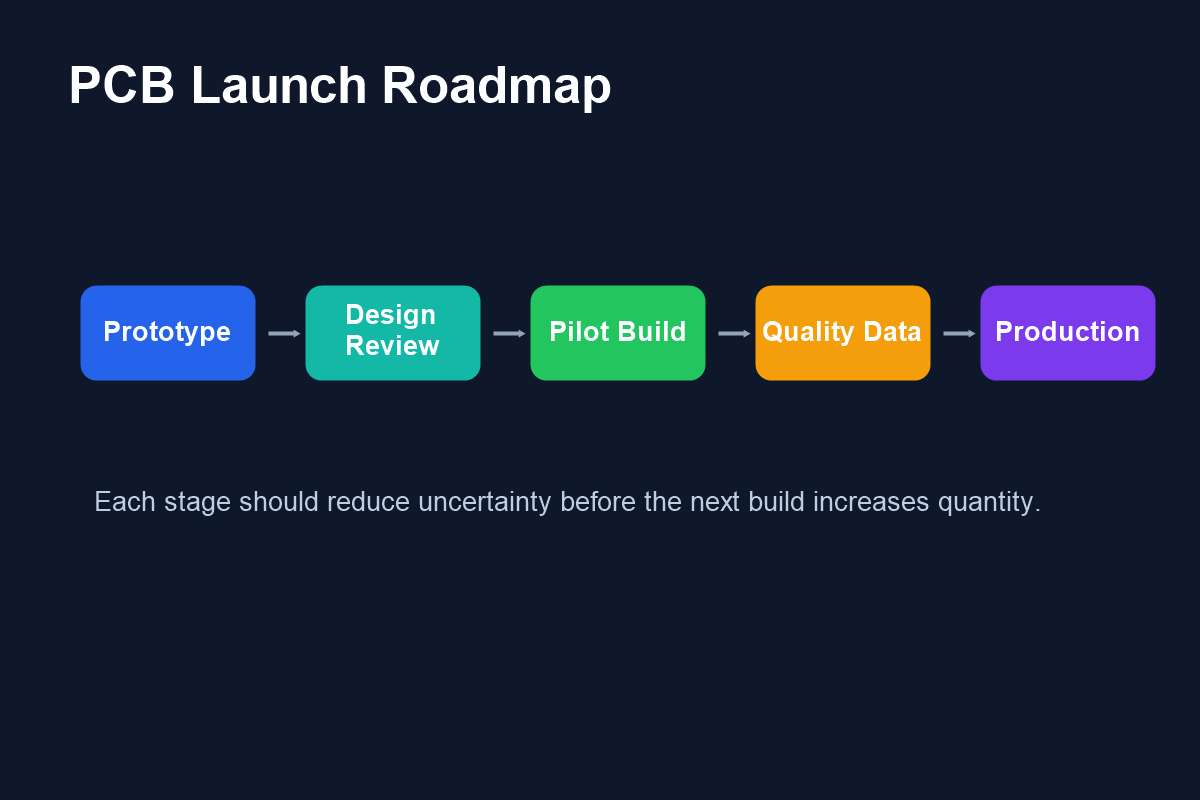
The Basic PCB Launch Roadmap
A practical launch path often moves through prototype, design review, pilot build, quality data review, and production release. Each stage should reduce uncertainty. The prototype confirms that the board works. The review stage confirms that the design can be manufactured. The pilot build confirms that the process can repeat. Production release begins only after the main risks have been measured and addressed.
Engineering validation and first functional learning.
Design validation, DFM closure, and test refinement.
Small production-style run with measurable yield data.
Mass production with controlled documentation and quality.
Production Readiness Gates
Before a PCB moves into production, several gates should be closed. The design should be frozen, DFM feedback should be resolved, the BOM should be stable, test coverage should be defined, and pilot build defects should be tracked. These gates prevent avoidable changes from entering the production line.
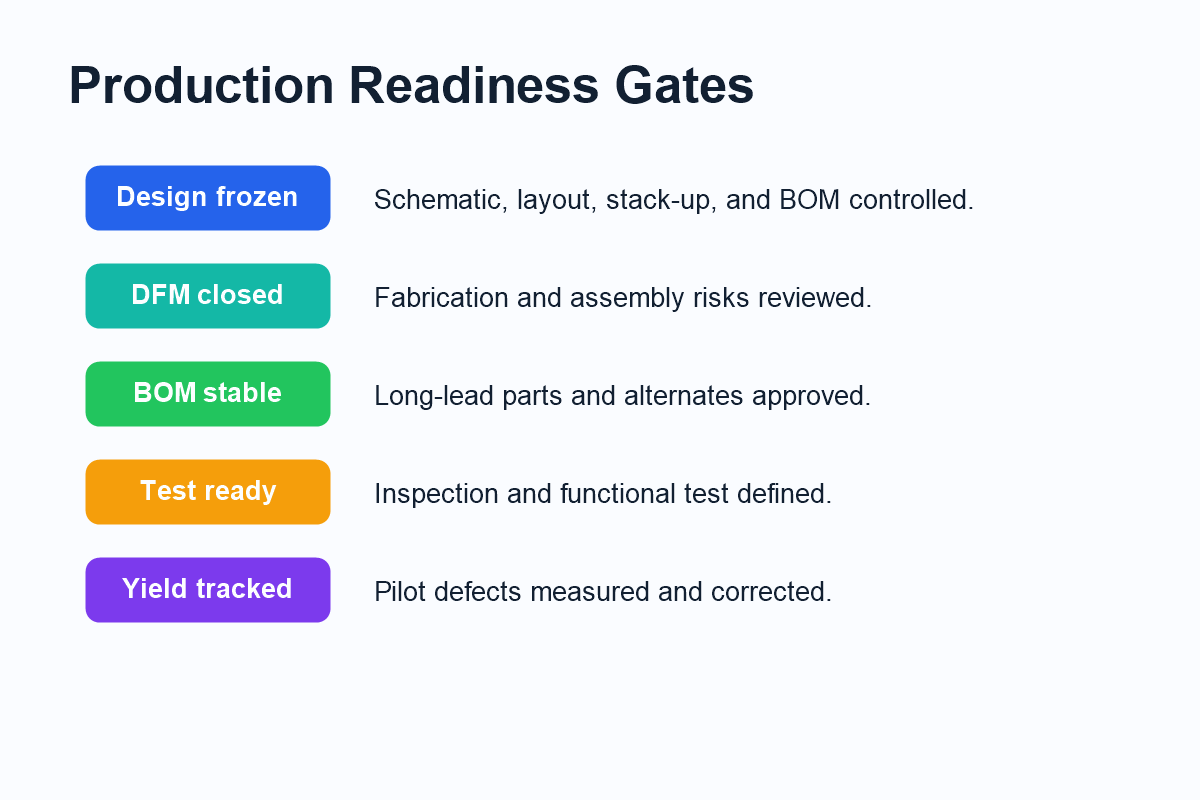
Design freeze does not mean that engineering stops learning. It means that changes are controlled. If every small issue triggers an undocumented layout change or component substitution, manufacturing consistency becomes difficult to maintain.
Risk Matrix for Scaling PCB Builds
Scaling from 10 boards to 500 or 5,000 boards changes the risk profile. A part that was available for prototype builds may become a sourcing problem. A small assembly defect may become a yield issue. A missing test point may create inspection gaps. The team should identify these risks before release.
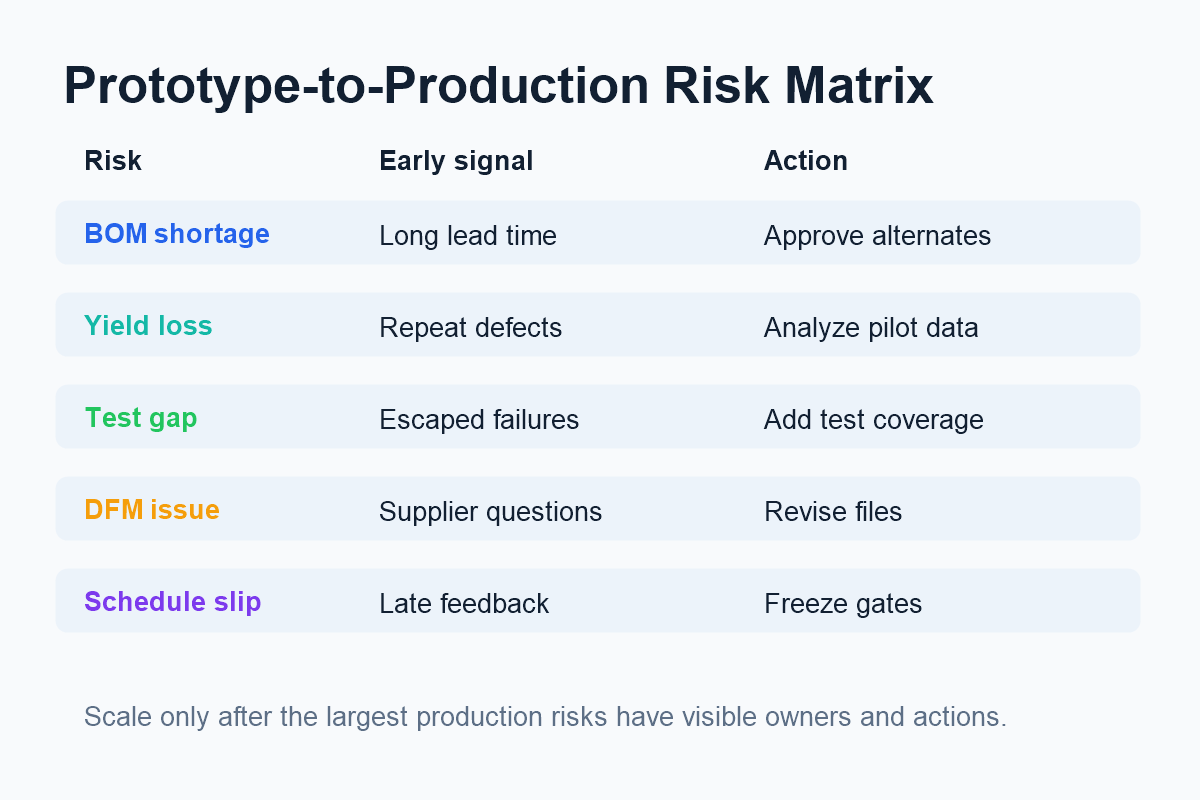
| Gate | Question to ask | If not ready |
|---|---|---|
| BOM | Are long-lead and obsolete parts reviewed? | Approve alternates before purchase. |
| DFM | Has the manufacturer reviewed fabrication and assembly risks? | Resolve file and layout comments. |
| Testing | Can failures be detected before shipment? | Add test points or functional checks. |
| Yield | Are pilot defects measured and corrected? | Run root cause review before scaling. |
Manufacturing Data Package
A complete manufacturing data package helps the PCB manufacturer quote, fabricate, assemble, inspect, and deliver the product with fewer questions. At minimum, teams should prepare Gerber files, drill files, BOM, pick-and-place data, assembly notes, and test requirements.
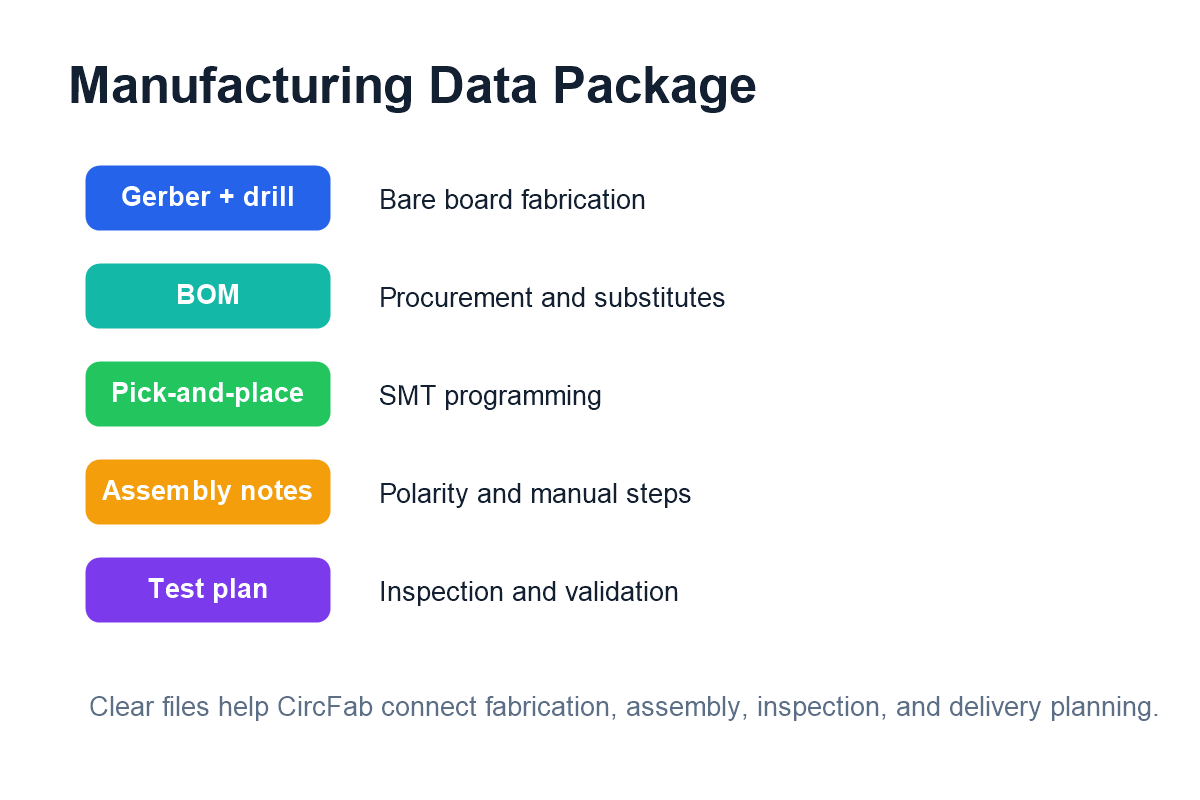
CircFab supports PCB assembly and electronics manufacturing from prototype builds to production. Clear files help connect fabrication, component sourcing, SMT or through-hole assembly, inspection, and delivery planning into one practical workflow.
Pilot Build Feedback Loop
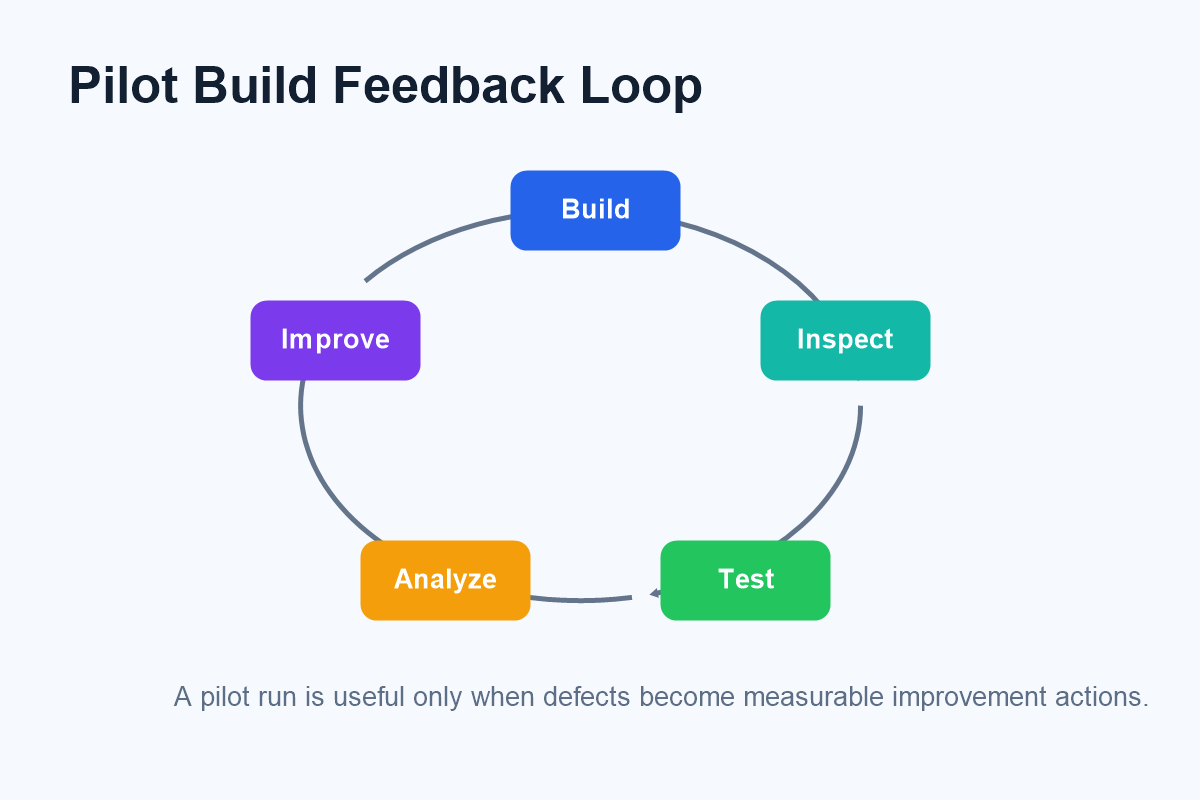
The pilot build is one of the most valuable stages because it reveals how the design behaves under production-style conditions. The point is not only to build more boards. The point is to inspect the results, test them, analyze defects, and improve the process before committing to larger quantities.
Checklist Before Mass Production
- Confirm final PCB revision, stack-up, material, surface finish, and fabrication notes.
- Review BOM availability, approved substitutes, lifecycle status, and lead times.
- Verify footprints, polarity markings, fiducials, panelization, and assembly drawings.
- Define AOI, X-ray, electrical inspection, and functional testing requirements.
- Review pilot yield, defect patterns, rework records, and process corrections.
- Freeze documentation before moving into larger production quantities.
Conclusion
Moving from prototype to production requires more than a working board. It requires controlled design data, stable sourcing, closed DFM issues, clear assembly documentation, measurable pilot results, and reliable inspection coverage.
By using a structured launch roadmap, hardware teams can reduce late changes, sourcing delays, assembly defects, and production risk. A manufacturing partner such as CircFab can help connect PCB fabrication, assembly, inspection, and delivery planning so the transition from prototype to production is more predictable.