
What Is Turnkey PCB Assembly?
Turnkey PCB assembly is a manufacturing service model where one partner manages multiple parts of the electronics production process. Instead of asking the customer to coordinate PCB fabrication, component sourcing, SMT assembly, through-hole assembly, inspection, and delivery separately, a turnkey provider connects these steps into one controlled workflow.
This approach is especially useful for engineering teams that want to move from prototype to production without losing time across procurement, supplier coordination, and assembly planning. For companies building new electronic products, turnkey PCBA can reduce communication gaps and make manufacturing responsibilities clearer.
Why Turnkey PCBA Matters
PCB assembly is not only about placing components on a board. A reliable build depends on accurate design files, a clean BOM, available components, manufacturable PCB data, controlled soldering processes, inspection, testing, and packaging. If any one of these areas is poorly managed, the project can face delays, rework, or quality problems.
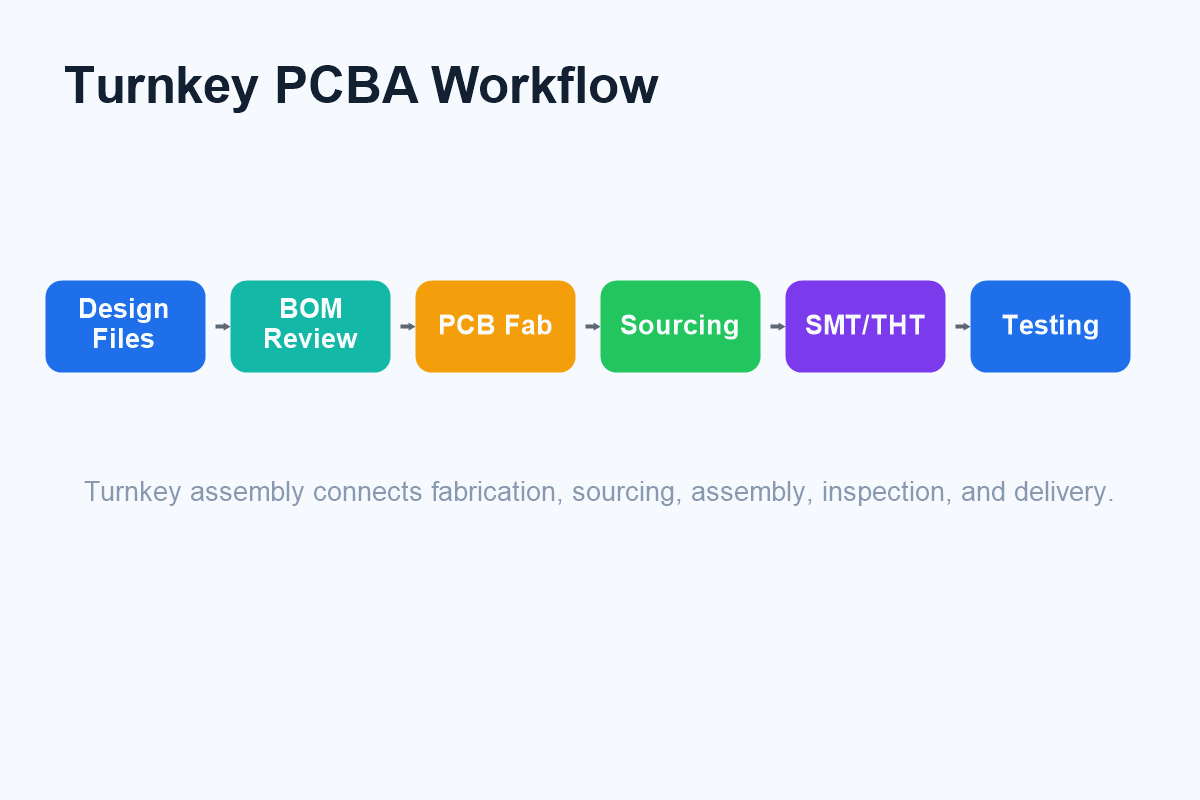
A turnkey workflow gives the project a single manufacturing path. The assembly partner can review the BOM, identify sourcing risks, check PCB fabrication requirements, prepare the assembly process, and use inspection data to reduce defects before shipment.
Key Steps in a Turnkey PCB Assembly Workflow
The first step is reviewing design files. Gerber files, drill files, pick-and-place data, BOM information, assembly drawings, and special requirements should be checked before production begins. Clear data helps avoid incorrect footprints, missing parts, polarity errors, and fabrication mismatches.
Next comes BOM review and component sourcing. The manufacturer needs to confirm manufacturer part numbers, package types, quantities, lead times, lifecycle status, and acceptable alternatives. This step is critical because unavailable or obsolete components can delay production even when the PCB design itself is ready.
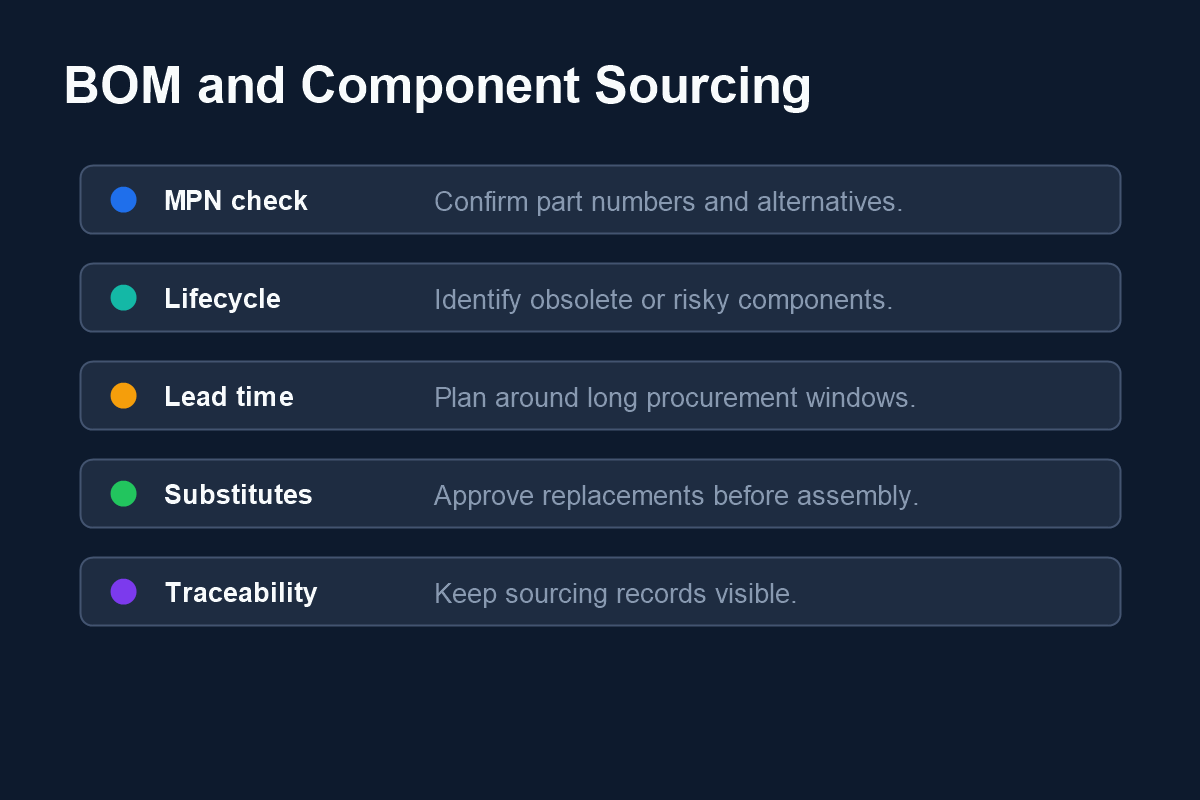
After the sourcing plan is clear, PCB fabrication and assembly preparation can move forward. For SMT assembly, stencil design, solder paste selection, placement programming, reflow profiling, and inspection planning all need attention. For through-hole assembly, lead forming, manual soldering requirements, wave soldering, and selective soldering may also be considered.
DFM and DFA Before Production
Turnkey assembly works best when DFM and DFA reviews happen early. DFM, or design for manufacturability, checks whether the bare PCB can be fabricated reliably. DFA, or design for assembly, checks whether components can be placed, soldered, inspected, and tested efficiently.
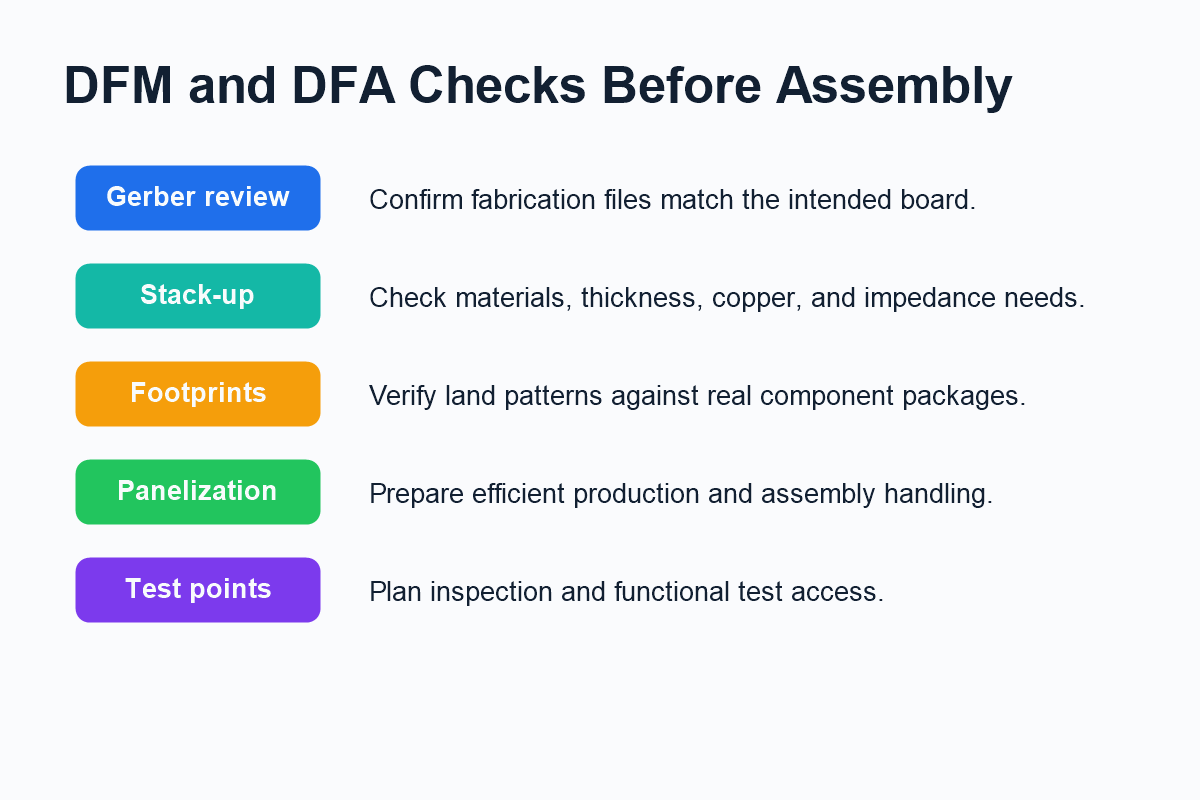
Important checks include trace and spacing limits, stack-up, copper thickness, board thickness, surface finish, solder mask clearance, component footprint accuracy, panelization, fiducials, test points, and assembly access. These details may seem small, but they often determine whether a product can be built smoothly at scale.
Quality Control in Turnkey PCBA
Quality control should be built into every stage of turnkey PCB assembly. Incoming quality control helps confirm that components and bare PCBs meet requirements before assembly. Solder paste inspection can verify paste volume and alignment. AOI can detect visible placement and soldering issues. X-ray inspection can check hidden solder joints under BGA, QFN, LGA, and power packages. Functional testing verifies that the assembled board works as intended.
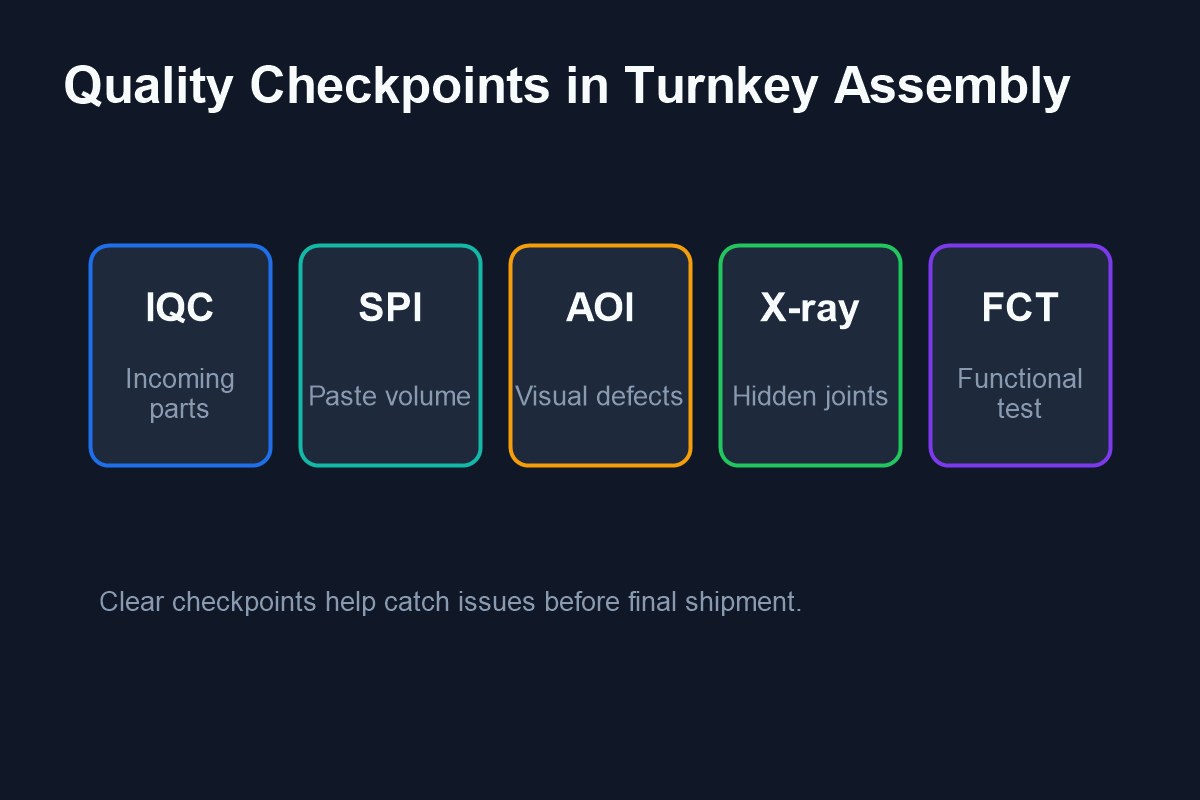
This type of inspection discipline fits the manufacturing model promoted by CircFab, which focuses on PCB assembly, electronics manufacturing services, quality assurance, and production support from prototype builds to larger production runs. When inspection and assembly data stay connected, teams can identify problems faster and improve the process before defects repeat.
From Prototype to Production
Many electronics projects begin with a prototype, but the real challenge is moving into stable production. A prototype build helps verify the design and assembly approach. A pilot run helps confirm yield, test coverage, documentation, and production readiness. Full production then requires controlled quality, stable sourcing, repeatable assembly, and clear delivery planning.
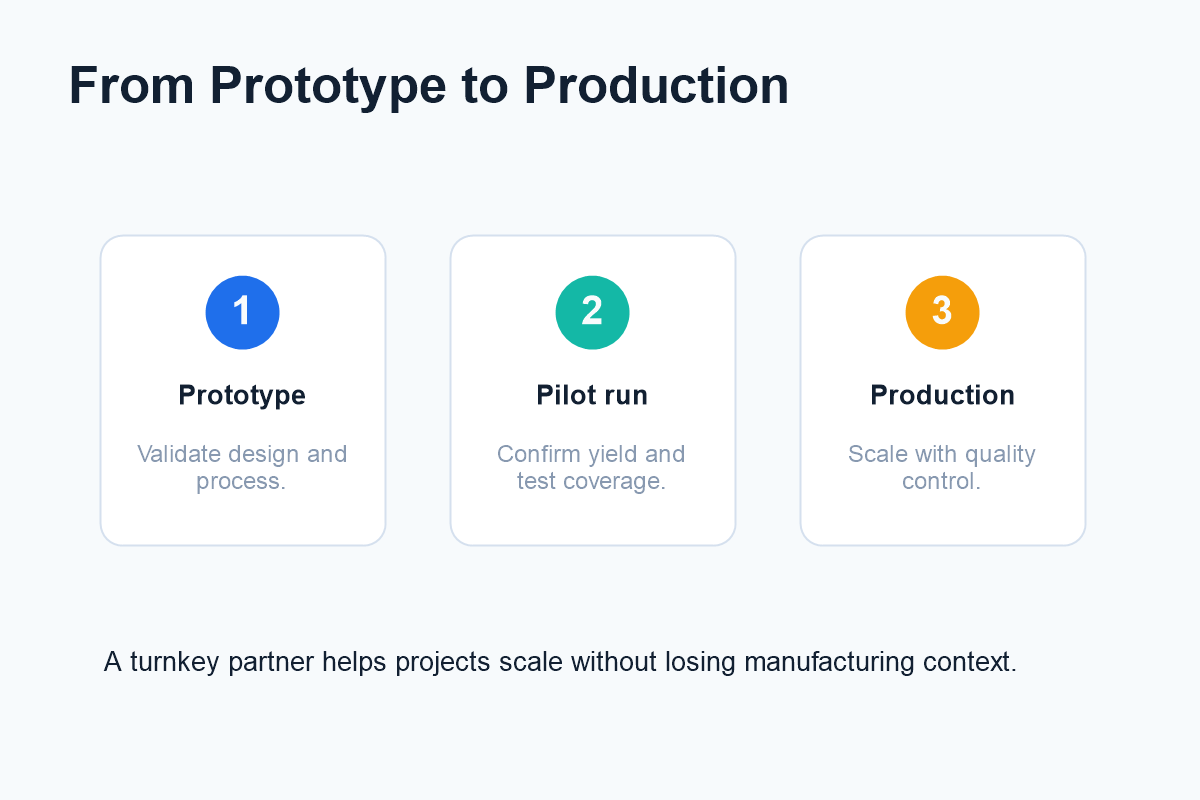
CircFab presents its services around this practical path: prototype to production, PCB assembly, manufacturing, inspection, and quality-focused support. For hardware teams, this type of integrated support can reduce the burden of managing separate fabrication, sourcing, and assembly suppliers.
Benefits of Choosing a Turnkey Assembly Partner
A turnkey partner can simplify project management. Instead of coordinating multiple suppliers, the customer can work with one manufacturing team that understands the full build. This can reduce communication errors, improve scheduling, and make technical feedback easier to apply.
Turnkey PCBA can also improve risk management. A manufacturing partner that reviews the BOM, validates fabrication data, checks assembly requirements, and performs inspection can identify issues before they become production delays. This is useful for startups, engineering teams, industrial product developers, and companies that need predictable electronics manufacturing support.
What to Prepare Before Requesting a Quote
To get an accurate turnkey PCB assembly quote, customers should prepare complete design and assembly data. This usually includes Gerber files, drill files, BOM, pick-and-place file, assembly drawing, test requirements, expected quantity, surface finish preference, material requirements, and any special packaging or labeling needs.
If components have approved substitutes, they should be listed clearly. If certain parts must come from specific suppliers, that should also be communicated. The more complete the information is, the easier it is for the manufacturer to quote accurately and identify risk early.
Common Mistakes to Avoid
One common mistake is sending incomplete BOM data. Missing manufacturer part numbers, package information, or approved alternatives can slow sourcing and increase the chance of incorrect parts. Another mistake is ignoring assembly constraints during PCB layout. Small spacing issues, missing fiducials, poor test access, or incorrect footprints can create avoidable assembly problems.
It is also risky to delay DFM and DFA review until after the board is ordered. Early review helps reduce redesign, rework, and schedule pressure. For production projects, manufacturing feedback should be part of the design process rather than a final check after release.
Conclusion
Turnkey PCB assembly helps connect PCB fabrication, component sourcing, assembly, inspection, testing, and delivery into one practical workflow. It is valuable for teams that want to reduce supplier coordination, improve build quality, and move from prototype to production with fewer delays.
For electronics teams looking for manufacturing support, a turnkey partner such as CircFab can help align design data, sourcing, PCB assembly, quality assurance, and production planning. The result is a clearer path from engineering files to reliable finished boards.